Be yourself; Everyone else is already taken.
— Oscar Wilde.
This is the first post on my new blog. I’m just getting this new blog going, so stay tuned for more. Subscribe below to get notified when I post new updates.
Be yourself; Everyone else is already taken.
— Oscar Wilde.
This is the first post on my new blog. I’m just getting this new blog going, so stay tuned for more. Subscribe below to get notified when I post new updates.
Patterning material is the general term used for the constituents used for photolithography. Photolithography involves carving integrated circuits (ICs) on wafers and etching out materials from a wafer to fabricate electronic devices. This etching is done on polymer films, which are called photoresists. Photoresists get deposited on the surface, when exposed to light of fixed wavelength. This process is extensively used to fabricate printed circuit boards (PCBs). Owing to the steady growth in the PCBs industry, patterning material market is expected to continually expand in the near future.
This report segments the patterning material market on the bases of type, application and geography. On the basis of type, patterning material is categorized as G line and I line, positive tone and negative tone. The positive tone is further subdivided into 193 nm and 248 nm, which denote the wavelength of light. By application, the patterning material market is classified into patterning and etching of substrate, fabrication of PCBs, sand carving, sensors, dynamic RAM, micro and nano electromechanical systems. The forecast period for the report is taken to be from 2016 to 2021.
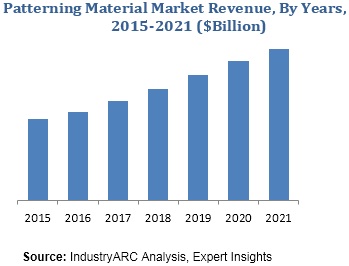
The report analyzes the global patterning material market on the basis of geography as well. APAC by far holds the largest share in the global revenues of the market, which is attributed to the high concentration of electronics industry in China, Japan and South Korea. APAC is estimated to maintain its lead by growing at the fastest pace to grab an even larger chunk of the revenues by 2021. Americas are in pursuit at second position, while Europe and RoW pose no threat to the APAC and Americas.
Sample Companies Profiled in this Report are:
The market is quite consolidated on account of the above mentioned big companies in the market.
Other key players include:
Traction transformer is a vital component of a rolling stock. It is an integral part of an electric traction system in the vehicle and helps in the smooth movement of motors used in such as locomotives, high-speed trains, and trams. Owing to their applications, the stresses on traction transformers are high and needs to be considered while designing and deployment. Additional considerations include space and vibration. Traction systems can be broadly segmented into: AC systems and DC systems with majorly used systems are: 25 kV AC 50 Hz, 15 kV AC 16 2/3 Hz, 3 kV DC, 1.5 kV DC, and 1.2 kV DC.
In terms of system, it is estimated that market for AC systems and EMUs will witness the highest growth.
Drivers for this market include government funding and liberalization of rail transport. However, social issues associated with rail projects such as land acquisition may indirectly hamper the market.
This report identifies the global traction transformer market size in for the year 2014-2016, and forecast of the same for year 2021. It also highlights the potential growth opportunities in the coming years, while also reviewing the market drivers, restraints, growth indicators, challenges, market dynamics, competitive landscape, and other key aspects with respect to Traction Transformer market.
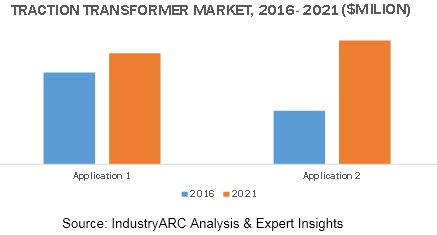
Geographically, Europe estimated to be the largest market for traction transformers with rail electrification as a major driver. The U.S. is the biggest potential market in the Americas owing to the low adoption rate of electrification. Asia Pacific is an emerging market for traction transformers due to its high population density. Among all the types, tapped traction transformer has the highest market share in global traction transformer market.
This report segments global traction transformer market on the basis of type, rolling stock, voltage network and regional market as follows:
Sample Companies profiled in this report are:
Soil Moisture Sensor is used to monitor the moisture of the soil by measuring volumetric water content of soil using principle of capacitance. Increasing scarcity of water resource, has increased adoption of the soil moisture sensors market in a wide range of applications in areas such as agriculture, sports turf, weather forecasting, forestry residential, landscaping and ground care, research studies, and construction. Globally demand for soil moisture sensor is being driven by gradual shift in the climatic conditions and increasing awareness among government agencies. The key challenge faced by soil moisture sensor market is lack of awareness among farmers. The increasing adoption of soil moisture sensor in applications sports segment, residential society and others provides a greater opportunity for the market.
This report identifies the global soil moisture sensor market size in for the year 2014-2016, and forecast of the same for year 2021. It also highlights the potential growth opportunities in the coming years, while also reviewing the market drivers, restraints, growth indicators, challenges, market dynamics, competitive landscape, and other key aspects with respect to soil moisture sensor market.
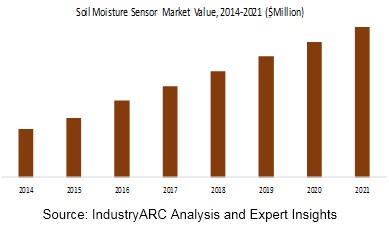
Geographically, Americas dominated the global soil moisture sensor market, while Asia-Pacific is projected to have higher growth rates during the forecast period. Middle East and Africa currently accounts for a smaller share, however they are forecast to have significant growth in near future, owing to rising demand of soil moisture sensor in this region. The overall soil moisture sensor market is dominated by agriculture application, owing to soil moisture sensor ability to monitor soil moisture in different fields and accordingly save critical water resource by avoiding over irrigation.
This report segments global soil moisture sensor market on the basis of type, end-use industry, and regional market as follows:
This report identifies all the major companies operating in the Soil Moisture Sensor market. Some of the major companies’ profiles in detail are as follows:
The amount of data out there is unbelievable and big data is here to sift through, analyze and make sense of that huge amount of data. Sensor data analytics refers to the method of collecting, transforming and analyzing sensor data. The increasing number of sensors deployed in various environments requires the data collected by the sensor to be collated and analyzed in order to take informed decisions in the future. The opportunity for deploying Sensor data analytics are endless with sensors being used in practically all possible applications. In the case of healthcare, patients are monitored with a plethora of sensors connected to them and this informative is extremely critical for healthcare practitioners to prescribe further medication if required and also be able to judge the progress of a patient. Consumers’ buying patterns can also be studied by deploying sensors across a departmental store. Several decisions including an optimal layout of the store can also be inferred from the analysis of the data collected from the sensors. These are just a few examples of the need for sensor data analytics. The market is driven by such strong factors that it is expected to experience a double digit growth rate till the end of the forecast period.
With the high cost of initial investment required to set up sensor data analytics coupled with the lack of awareness in certain regions, the growth of the sensor data analytics market will be restricted for a few years.
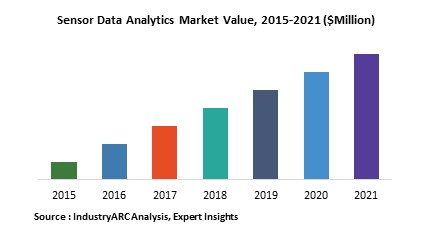
The Sensor data analytics market can be segmented on the basis of hardware Sensors, Transmitters, Displays, Cameras and Others. The market has also been segmented based on the services offered such as Consulting, Implementation and Operation and Maintenance and Others. In terms of applications, the Sensor data analytics market has been segmented across the following Telecommunications, Retail, Healthcare, BFSI, Government, Transporation, Energy and Utilities and Others.
North America currently accounts for the largest share of sensor data analytics market followed closely by the European regions. This trend will remain the same till the end of the forecast period. Significant amount of research and development work being conducted across the globe makes it likely that the investment costs could be brought down to a nominal amount. The market has been segmented based on the following geographies North America, South America, APAC, Europe, Middle East and Africa.
Sample Companies Profiled in this Report are:
Automatic identification systems (AIS) are designed to enable collaborative communication among onshore-based coastal authorities and various vessels. The system is capable of providing dynamic, static and voyage data about one ship to multiple ships in the vicinity and nearby coastal authorities. As per the Regulation 19 of SOLAS – chapter V, every ship is required to integrate ship-borne navigational equipment, as per the type of ship. However, in 2000, the International Maritime Organization revised the need to carry navigational equipment and approved a mandate stating that automatic identification systems must be equipped with all ships.
Significant changes in international trade laws and regulations coupled with the evolution of marine transport have made a major impact on the development of technologies required to deal with the rising marine traffic. Rapid and dedicated globalization has been the key factor propelling the building and expansion of marine transport industry worldwide. Therefore, rising marine traffic coupled with growing world trade are considered as prominent factors accounting for the transformation and global growth of marine transport. In the recent past, the usage of automatic identification systems has witnessed an exponential rise. The concerned governments and authorities across the world have made considerable investments in order to integrate automatic identification systems into ships, thereby maximizing marine traffic and trade management and minimizing marine accidents.
It is further analyzed that the implementation of development of large-scale terrestrial AIS is a key factor expected to bolster the demand of automatic identification systems during the forecast period.
The global automatic identification systems market is segmented as follows:
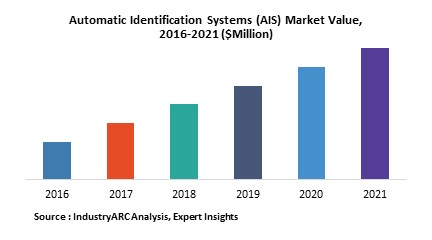
Lastly, the global automatic identification systems market is segmented by regions into North America, Asia Pacific (APAC), Europe and Rest of the World (RoW). The automatic identification systems market is expected to grow significantly across North America, trailed by Asia Pacific and Europe. The primary reason for the growth of automatic identification systems market in these regions is there huge manufacturing capabilities, therefore leading to significant marine trade and transport across other countries and regions.
Some of the key players operating in the global automatic identification systems market are:
Fertilizers market has a humungous growth capacity as feeding the growing population is the major challenge. In the recent past, urbanization has become a basic need to survive for any economy. The total world population has increased from a mere 750 million in 1950 to an immense 7.3 billion in 2015. In such a globalized world, there should be enough food for feeding the increasing population. Hence, there is an upsurge in the demand for improving the yield of crops. This impetus has induced the growth of fertilizers market, which is directly related to the agricultural industry. One of the important components of these fertilizers is phosphorous.
Plants require phosphorus for metabolism like growth, utilization of starch, photosynthesis, nucleus formation and cell division to name among a few others. One of the main reasons why phosphorous is necessary for plants is due to its capacity to store energy generated from photosynthesis and the metabolism of carbohydrates, for later use in growth and reproduction. These fertilizers helps a plant convert other nutrients into usable building blocks. Phosphorus is one of the main three nutrients most commonly found in fertilizers. Today there is a range of phosphatic fertilizers available to farmers. Some contain only phosphorus, others contain two or more nutrients. Manufacturers often produce a variety of such fertilizers which contain nitrogen, phosphorus and potassium in various proportions.
Phosphate fertilizers market can be categorized into the type of fertilizers commercially available in the market which include monoammonium phosphate (MAP), diammonium phosphate (DAP), rock phosphate and super phosphate. DAP and super phosphates are the majorly consumed fertilizers among the list of phosphate fertilizers available.
The global market for phosphate fertilizers was estimated to be $XX billion in 2015. The global market for phosphate fertilizers market is estimated to grow at a CAGR of XX% and is forecast to reach $XX billion by 2021. The phosphate fertilizers are forecast to have the highest growth of X% during the forecast period 2016-2021. Americas and Asia alone are estimated to occupy a share of more than XX% during 2016-2021.
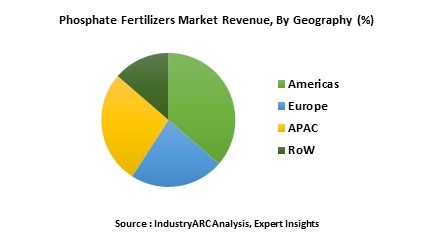
Asia-Pacific is the leading market for phosphate fertilizers. This region is forecast to have highest growth in the next few years owing to the growing adoption of phosphate fertilizers in agricultural applications. The phosphate fertilizer market in Asia accounts to XX% of the global market and is the fastest growing market followed by Americas.
Growing Population and Increase in Food Demand Drives the Use of Phosphate Fertilizers
With the growing population, there has been a dire need to improve the yield of agricultural production to feed the ever increasing population. Phosphorus is often considered as one of the most important raw fertilizers used for enhancing the prompt growth of the crops and also helps in imbedding some properties like getting mature faster and being more drought-resistant.
Demand for fertilizers is also, strongly tied to the population’s income and standard of living. With the increasing per capita income, the standard of living also increases, so does the consumption of food by the people. According to FAO statistics, over the last 5 decades, grain consumption has increased by 2.1% a year on average while population has grown by 1.6% per year.
Sample Companies Profiled in this Report are:
Low Power Wide Area Network Market OverviewThe Global market for Low Power Wide Area Network is forecast to reach $2.5 billion by 2026, growing at a CAGR of 12.7% from 2021 to 2026. The market growth is attributed to the factors such as increased adoption of IoT, M2M systems, increased need for long-range connectivity between these systems, rising penetration of 5G and other wireless technology and others. Moreover, the exponential growth in smart city infrastructure is expected to stimulate development in the market. Owing to the introduction of cloud-based technologies, demand for the financial analytics system is growing. Cloud driven technologies support stable data management and produce result-oriented production. However, these programs improve the efficiency of the business by upgrading details in real-time. The rising deployment of Narrowband IOT and Sigfox technologies in Wireless Sensor Networks will also propel the market growth.
Report CoverageThe report: “Low Power Wide Area Network market – Forecast (2021-2026)”, by IndustryARC covers an in-depth analysis of the following segments of the Low Power Wide Area Network market.By Technology type: Licensed Spectrum, Extended Coverage GSM (LTE-M, NarrowBand-IoT, Others), Unlicensed Spectrum (Ultra-Narrow Band (Weightless-W,-N,-P; Sigfox), LoRa/LoRaWAN, IEEE 802.11ah, Random Phase Multiple Access (Ingenu), Others)By Deployment model: On premise, CloudBy Application: Smart Gas and Water Metering, Asset tracking, Smart Buildings, Smart Parking, Precision Agriculture, Smart Waste Management, Livestock Monitoring, Wireless Sensor Networks and OthersBy End Users: Healthcare, Agriculture, Logistics and Transportation, Manufacturing, Utilities, Consumer Electronics, Government and Public Sector and OthersBy Geography: North America (U.S, Canada, Mexico), Europe(Germany, UK, France, Italy, Spain, Russia and Others), APAC(China, Japan India, South Korea, Australia and Others), South America (Brazil, Argentina and others), and ROW (Middle East and Africa)
Key Takeaways
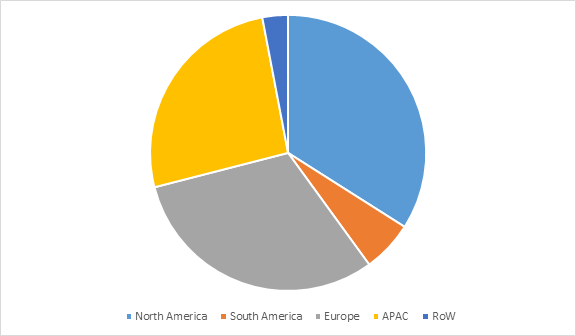
Low Power Wide Area Network Market, BY Geography, 2020
For more details on this report – Request for Sample
Low Power Wide Area Network Market Segment Analysis – By Technology typeNB-IoT technology type segment is anticipated to hold the highest growth rate at 15.1% during the forecast period 2021-2026. The increasing ecosystem of the IoT network will create demand for networks that can provide access to IoT devices that need low latency and low data transmission speeds, such as smart water metres. NB-IoT technology increases the power efficiency of these instruments and satisfies the challenging specifications for coverage. NB-IoT is perceived to be the potentially less costly alternative, since it avoids the need for a gateway. Usually, most infrastructures provide gateways that collect sensor data and then connect with the main server. Sensor data is therefore sent directly to the primary server with NB-IoT. Huawei, Ericsson, Qualcomm and Vodafone are all aggressively involved in commercial NB-IoT technologies.
Low Power Wide Area Network Market Segment Analysis – By Deployment ModelCloud deployment model held the highest market share of Low Power Wide Area Network in 2020 at 53% share. Moreover, it is anticipated to witness the significant market growth during the forecast period 2021-2026. Customers choose cloud services for fast integration of the IoT and wireless networks. Enterprises can significantly reduce the timeline for deployment by following the cloud deployment model and handling cloud-enabled LPWAN servers and gateways with ease. LPWAN businesses also offer cloud services that allow consumers to easily access IoT sensor-generated data and allow service providers to control the LPWA network. In June 2018, The Occam Technology Group partnered with Google Cloud to offer LoRaWAN’s OccamSmart Network Server Stack running on the Google Cloud Platform. In this way, companies minimise costs and deploy LoRaWAN communities within the global framework of Google Cloud. Such product developments enhance the market growth.
Low Power Wide Area Network Market Segment Analysis – By GeographyNorth America region held the highest market growth in 2020 at 37%. The market growth is attributed to the factors such as technological advancements, increasing demand for energy efficient devices and increasing demand for high speed communication in the region. The region also has a well-established infrastructure which allows easy implementation of advanced technologies and provides better connectivity. North America, which has prominently taken the lead on various technological developments such as smart homes, smart cities, Internet of Things (IoT), big data and consumer electronics; has emerged as the nucleus for Low Power Wide Area Network market demand. Moreover, APAC region is anticipated to witness the significant market growth during the forecast period 2021-2026. The market growth is owing to growing digitization, industrialisation technological developments, growing data centres and others. Digitization provides fresh opportunities for exploiting emerging technology and adapting quickly to developments in the industry, with network infrastructure serving a significant role. Furthermore, the introduction of Industry 4.0 technologies fuel the growth of IOT smart technology frameworks which in turn drives the market growth of LPWAN.
Low Power Wide Area Network Market Drivers
Rising penetration of 5GGlobally, internet usage has increased, as well as the growing use of modern wireless technologies. Advanced broadband infrastructure including 3G, 4G and 5G is anticipated to be commonly adopted in the future. In most areas of the world service networks in telecommunications are continuously developing. Technological advancements including secure phone communications, mission crucial LTE, sophisticated terrestrial trunked radio networks and others is anticipated to boosts the market growth.
Growing implementation of IOTIoT helps products and services to be more customized. This mean that the products and services can be much more oriented on the desires and expectations of the consumer. IoT helps businesses to collect large volumes of consumer data in real time, enabling a more personal view of the client. Thus, LPWAN technologies such as NB-IOT are being increasingly deployed in wireless sensor networks, remote monitoring and other IOT use cases.
Low Power Wide Area Network Market Challenges
Security concernsSecurity represents an IoT communication challenging task. Owing to its long range communication and relatively limited transfer time, IoT broadens the attack scope. -Each system inside the network is a potential vulnerability point and each hardware has its own protection mechanism to ensure safe communication.
Low Power Wide Area Network Market LandscapePartnerships and acquisitions along with product launches are the key strategies adopted by the players in the Low Power Wide Area Network market. As of 2020, the market for Low Power Wide Area Network market is consolidated with the top players including Link Labs, Ingenu, LORIOT, Nwave, Orange, Qualcomm, Semtech, Senet, Sigfox, Vodafone, WavIoT, and Verizon and among others.
Buy Now
Acquisitions/Technology Launches/Partnerships
Weightless LPWAN Devices Market – Forecast(2021 – 2026)Report Code: ESR 0684
LPWAN Devices Market – Forecast(2021 – 2026)Report Code: ESR 0674
For more Information and Communications Technology related reports, please click here
Diagnostic ECG Market Report OverviewDiagnostic ECG Market size in 2019 is estimated to be $6.85 billion, growing at a CAGR of 6.0% during the forecast period 2020-2025. Diagnostic Electrocardiograph (ECG) is a medical device that helps to diagnose problem related to the electrical activity of the heart. Electrodes record heart’s electrical signals which are placed on chest of the patient. It is a painless and non-invasive method to diagnose heart related problems. Electrocardiograph is performed to determine myocardial infarction, cardiac murmur, cardiac stress testing and fainting. Increasing prevalence of cardiovascular diseases and rising geriatric population across the globe are the major factors driving the growth of the market. Moreover, growing advancement in technologies in ECG devices further enhance the overall market demand for Diagnostic ECG during the forecast period 2020-2025.
The report: “Diagnostic ECG Market – Forecast (2020-2025)”, by Industry ARC, covers an in-depth analysis of the following segments of the Diagnostic ECG Market:By Product Type: Resting ECG Devices, Stress ECG Devices, Holter Monitors. By Lead Type : Single Lead, 3-6 Lead, 12 Lead.By End User: Hospital & Clinics, Home & Ambulatory Care, Others.By Geography: North America, Europe, Asia-Pacific, and Rest of the World.
Based on the Product Type, Diagnostic ECG Market is segmented into Resting ECG Devices, Stress ECG Devices, and Holter Monitors. The Resting ECG Devices segment is projected to be the fastest-growing segment and is projected to grow at a CAGR of 5.4% during the forecast period 2020-2025. This is mainly owing to quick, enhanced diagnosis with no preparation time. Moreover, it detect certain heart conditions such as hypertrophy of heart, ischemia, myocardial infarction, sequelae of myocardial infarction, cardiac arrhythmias, etc. in less time that are contributing to the growth of this segment.
Based on the Lead Type, Diagnostic ECG Market is segmented into Single Lead, 3-6 Lead and 12 Lead. In 2019, 3-6 Lead held the largest share in the Diagnostic ECG market. This is mainly owing to it is used most often in various cardiac diagnostic tests. Moreover, its high efficiency rate at low cost is also contributing to the growth of this segment.
Based on the End User, Diagnostic ECG Market is segmented into Hospital & Clinics, Home & Ambulatory Care, and Others. In 2019, Hospital & Clinics held the largest share in the Diagnostic ECG market. This is mainly owing to increasing number of patients in the hospitals for the diagnosis of cardiovascular diseases. Moreover, rising expenditure on buying ECG devices for quality cardiology care is also contributing to the growth of this segment.
North America dominated the Diagnostic ECG market share accounting for 41% of the market in 2019. This is mainly owing to increasing prevalence of cardiovascular diseases in this region. According to American Heart Association (AHA), cardiovascular diseases is the leading cause in the America and nearly half of the U.S. adults have some types of cardiovascular diseases which increases the demand of Diagnostic ECG Market.
However, the Asia-Pacific region is projected to be the fastest-growing during the forecast period 2020-2025. This is owing to increasing generic population coupled with rising incidence of chronic diseases.
Increasing prevalence of cardiovascular diseases and chronic diseases are some factors driving the growth of Diagnostic ECG market. According to World Health Organization (WHO), cardiovascular diseases are the leading cause of death in globally, and cause around 17.9 million deaths annually in worldwide. Moreover, rising generic populations is also set to increase the market growth.
Growing advancement in technologies for development of ECG devices coupled with introduction of remote monitoring device are some factors driving the growth of the market. Moreover rising disposable income of the people coupled with increasing expenditure on healthcare is contributing to the growth of Diagnostic ECG market.
Irregular reimbursement policies is challenging the growth of the market. Moreover, uncertainty in market saturation and economic circumstances are further restraining its market growth during the forecast period 2020-2025.
Product launches, Merger & Acquisitions, joint ventures and R&D activities are key strategies adopted by players in the Diagnostic ECG Market. Diagnostic ECG top 10 companies are GE Healthcare, BioTelemetry Inc., Koninklijke Philips, Schiller AG, SUZUKEN Co. Ltd., General Electric Company, BPL Medical Technologies, Nexus Lifecare, Mindray Medical and Midmark Corporation.
For more Lifesciences and Healthcare Market reports, Please click here
Injection Molding Machine Market Overview:According to the International Organization of Motor Vehicle Manufacturers (OICA), more than 97 million motor vehicles were produced in 2017 with a production growth rate of 2.36% year-on-year[1]. Furthermore, the future will be observing some tremendous growth in the automotive sector with an augmented vehicle production owing to the growth in demand for passenger cars and commercial vehicles. Now, the parts of these vehicles utilize injection molded plastic in bearings, gear wheels, and other parts because it’s lightweight and helps to enhance the fuel efficiency for which the demand for injection molding machine is increasing. According to IndustryARC’s market analyst, the injection molding machine market had a value of around $15 billion to $17 billion in 2018, and the demand for the product will grow at a CAGR of 2.8% to 3.2% during the forecast period of 2019 to 2025.
China is one of the major producers of resins and plastic products such as packaging material, mobile phone covers, and other consumer products that require injection molded plastic. Moreover, other countries such as India, Indonesia, and Taiwan are largely developing in the consumer products and automotive sectors which has been creating a gamut of opportunities in the injection molding machine marketplace to bloom in the APAC region which held a market share between 36% and 37% as of 2018.
Similar to trim moulding machine which is used to mold wood, injection molding machine is a machine used to manufacture plastic products such as polybutylene terephthalate, polyethylene terephthalate, acrylonitrile butadiene styrene, and thermosets. Injection molding machine finds applications in the construction, consumer goods, and packaging sector.
Owing to the escalating production of vehicles and the prospective increase in the demand of the same as mentioned above, the injection molding machine market will observe the application CAGR of a moderate 3% through to 2025 according to the market analyst. Moreover, the advent of lightweight and fuel-saving electric vehicles will aid to the rising demand for injection molded plastics in the future.
Due to the growth of the E-Commerce sector, there is a staggering increase in demand for the packaging material that uses injection molded plastic for packaging. Furthermore, the food losses and the trend of online food ordering has led to a growing demand for injection molded plastic in the F&B industries. While this has led to the growth of the packaging machinery market, it is also largely supporting the injection molding market revenue.
Right from the mobile phone covers that are produced in abundance globally to the plastic tiffin boxes and water bottles, everything requires injection molded plastics, which is becoming one of the most effective driving factors responsible for the injection molding machine market growth.
There is a palpable upsurge in the growth of the construction industry across the globe due to the catapulting industrial development, and the real estate sector is also making strides owing to the population growth. Now, these construction projects use an enormous amount of injection molded plastic for roofing, barricading, and shielding, which is widening the injection molding machine market size.
In addition to the aforementioned factors driving the growth of the injection molding machine market, injection molded plastics are a part of medical equipment, laboratory equipment, storage boxes, aircraft canopies & windows, and toy.
“The diverse applications of the injection molded plastic in the distinctive industries that will see noticeable growth in the future are leading to a sustainable demand for injection molded plastics, which is broadening the spectrum of injection molding machine market,” remarks the market expert in the report.
The major challenge to the injection molding machine market is that the countries are shunning from the usage of plastics because of the increasing pile of plastic wastes. Subsequently, there are some inevitable environmental regulations dwarfing the market size. Moreover, Injection molding machine production requires a lot of investment. In the technical perspective, the customers always seek customized machines that suit their product specification which is a bit of hassle for the vendors. However, new techniques can be developed to meet the supply to demand and fulfill the requirement of the diverse range of customers with different demands.
The key players in the injection molding machine market are GSH Industries, Solmser Kunststofftechnik GmbH & Co. KG, The Japan Steel Works, Ltd, Sumitomo Heavy Industries Ltd., Husky Injection Moldings Systems Ltd, Arburg GmbH & Co. KG, Engel Austria GmbH, Haitian International Holdings Limited, Milacron Holdings Corp, and Nissei Plastic Industrial Co. Limited.
The base year of the study is 2018, with forecast done up to 2025. The study presents a thorough analysis of the competitive landscape, taking into account the market shares of the leading companies. It also provides information on unit shipments. These provide the key market participants with the necessary business intelligence and help them understand the future of the injection molding machine market. The assessment includes the forecast, an overview of the competitive structure, the market shares of the competitors, as well as the market trends, market demands, market drivers, market challenges, and product analysis. The market drivers and restraints have been assessed to fathom their impact over the forecast period. This report further identifies the key opportunities for growth while also detailing the key challenges and possible threats. The key areas of focus include the types of injection molding machine market, and their specific applications in the automotive, consumer products, construction, and F&B sectors.
Buy Now
The injection molding machine market report also analyzes the major geographic regions as well as the major countries in these regions. The regions and countries covered in the study include:
For more Chemical and Materials related reports, please click here
The Aluminum metaphosphates market is not well penetrated with mostly only Chinese companies and American companies in the market, saving a few other countries. The product has been in the market though, for a long time, and is used in the production of various important materials. The market for Aluminum Metaphosphate fragmented based on its application in two segments, as a fluxing agent and as a binder.
What is Aluminum Metaphosphate?Aluminum Metaphosphate is an amorphous salt, white in color, which is insoluble in water. It is a high temperature material and is used as a binder in the manufacture of various other products. Aluminum Metaphosphate should be handled with care.
ApplicationsDue to its property of being a good binding agent it is used in the coatings for various sectors such as inks, paints, pigmentation, automotive coating, paper coating and many more. It is also used in the production of high temperature refractory materials, ceramics and glass.The major use of Aluminum metaphosphate has been in the manufacture of glass and ceramics and other high temperature refractory materials. Due to its high content of P2O5 it is an ideal source for glassy materials. It is used to make optical glass, laser glass and even filtering glass. Aluminum Metaphosphate is also used in the production of enamel as a fluxing agent which also reduces the melting point and increases the co-efficient of expansion of the enamel.
Trends
Due to its use in the manufacturing of glass and optical fibers and since the optical fiber market is set to grow over the next few years, it is safe to assume that the market for Aluminum metaphosphate will also see a growth.There has been a lot of research that has been done on the various possible applications of Ammonium Metaphosphate, some of the research includes the use of Ammonium Metaphosphate in magnetic steel coatings for improved performance, its application in the production of micro porous ceramic membranes to be used in filtration applications and many more. These research results give a positive outlook to the utility of the chemical even in the future in different applications. The research also being done on the recovery of phosphorous, which is a limited non-renewable resource is a positive outlook for the market in terms of useful material recovery from wasted products which will increase the raw material abundance for product manufacturing.
CompaniesCompanies that are a part of this market include: Sigma Aldrich, American Elements, Alfa Aesar, Prayon, Triveni chemicals, Mateck, ChemPUR, Shijiazhuang City Xinsheng Chemical Co., Ltd, Mimex Minersa group, China Skyrun and many more.
What is our report scope?The report incorporates in-depth assessment of the competitive landscape, product market sizing, product benchmarking, market trends, product developments, financial analysis, strategic analysis and so on to gauge the impact forces and potential opportunities of the market. Apart from this the report also includes a study of major developments in the market such as product launches, agreements, acquisitions, collaborations, mergers and so on to comprehend the prevailing market dynamics at present and its impact during the forecast period 2018-2023.
All our reports are customizable to your company needs to a certain extent, we do provide 20 free consulting hours along with purchase of each report, and this will allow you to request any additional data to customize the report to your needs.
Buy Now
Key Takeaways from this ReportEvaluate market potential through analyzing growth rates (CAGR %), Volume (Units) and Value ($M) data given at country level – for product types, end use applications and by different industry verticals.Understand the different dynamics influencing the market – key driving factors, challenges and hidden opportunities.Get in-depth insights on your competitor performance – market shares, strategies, financial benchmarking, product benchmarking, SWOT and more.Analyze the sales and distribution channels across key geographies to improve top-line revenues.Understand the industry supply chain with a deep-dive on the value augmentation at each step, in order to optimize value and bring efficiencies in your processes. Get a quick outlook on the market entropy – M&A’s, deals, partnerships, product launches of all key players for the past 4 years. Evaluate the supply-demand gaps, import-export statistics and regulatory landscape for more than top 20 countries globally for the market.

 MARKET REPORTS ANALYSIS